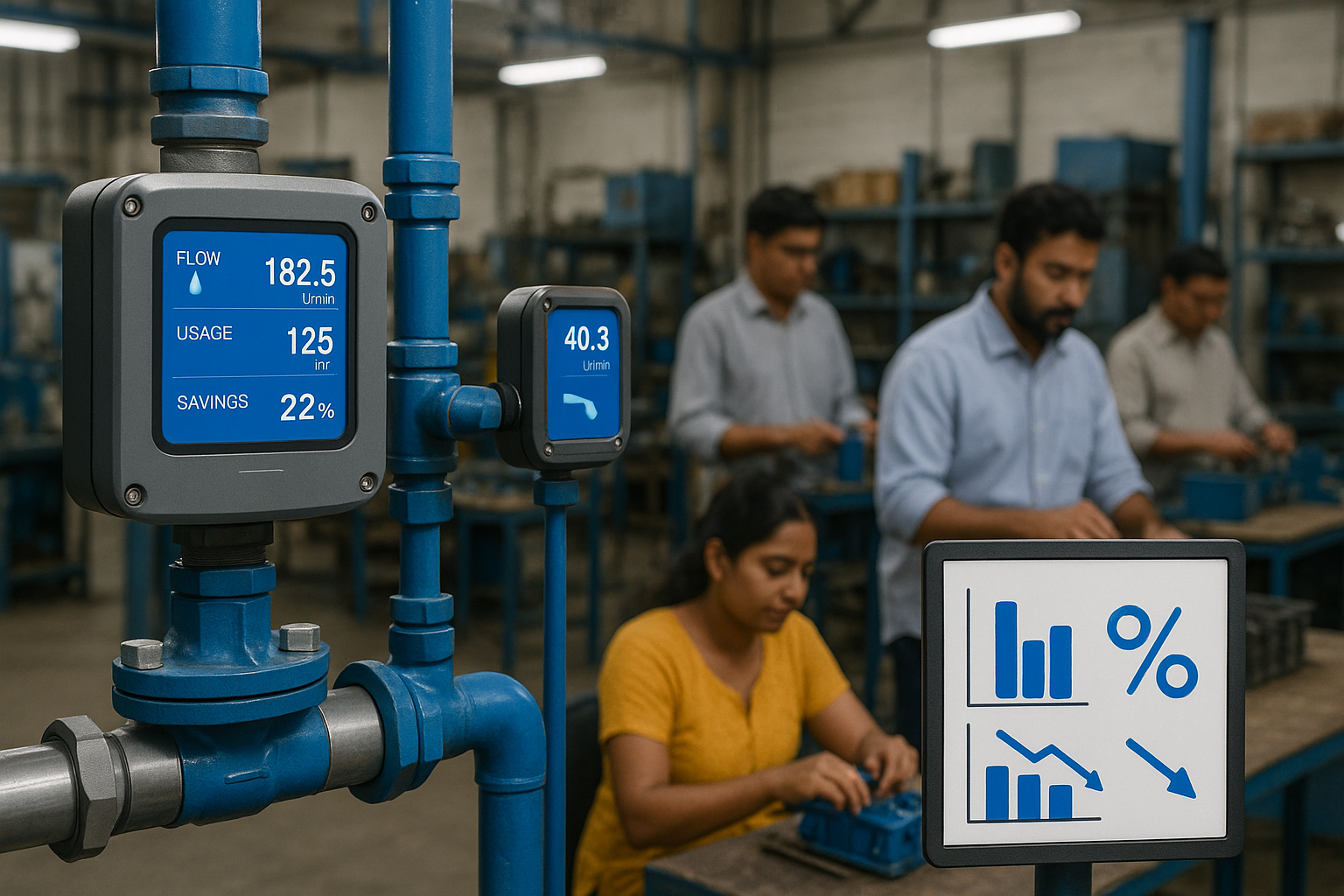
In a world where water scarcity and environmental concerns are becoming increasingly pressing, businesses in India are under significant pressure to optimize their water usage, reduce operational costs and ensure compliance with stringent environmental regulations. This is particularly true for small and medium-sized enterprises (SMEs), which often find themselves grappling with rising water costs and regulatory challenges. Fortunately, advancements in technology, particularly in artificial intelligence (AI), offer promising solutions to these challenges.
Understanding AI-Enabled Flow Monitoring
Smart flow monitoring is a cutting-edge technology that combines traditional flowmeters with the power of telemetry. These smart systems are designed to provide real-time analytics, and anomaly detection, significantly enhancing traditional flow monitoring capabilities.
Key Features of Smart Flow Monitoring:
– Real-Time Analytics: Immediate access to data means facility managers can monitor water usage patterns as they happen, providing opportunities to adjust operations for optimal efficiency.
– Anomaly Detection: Smart metres can identify unusual patterns or leaks that may not be immediately visible, preventing water wastage and potential damage.
The Importance of Water Monitoring for Indian SMEs
Water scarcity is a critical issue in India, affecting both industrial and commercial users. According to studies, the Indian smart water management market is projected to grow rapidly as industries seek to comply with regulatory mandates and improve operational efficiency.
Challenges Faced by SMEs:
– Water Scarcity: With limited resources, SMEs face higher risks from water shortages.
– Rising Costs: Escalating utility bills can significantly impact the bottom line.
– Regulatory Compliance: Meeting discharge norms set by the Central Pollution Control Board (CPCB) and state agencies is non-negotiable.
Cost-Saving Benefits of Smart Flow Monitoring
Implementing smart flow monitoring systems can lead to substantial cost savings for SMEs:
– Reduction in Water Consumption: Optimizing water usage can lead to savings of 10–30% in industrial settings, translating into significant cost reductions.
– Early Leak Detection: Identifying leaks early prevents unnecessary waste and the potentially high costs associated with repairs and downtime.
– Optimized Process Control: By providing detailed insights into water usage patterns, these systems enable more efficient operations across manufacturing and commercial settings.
Compliance and Sustainability: A Dual Benefit
AI-driven monitoring not only helps SMEs stay within regulatory boundaries but also supports sustainability goals by ensuring efficient resource utilization:
– Meeting Discharge Norms: Advanced monitoring ensures that discharge levels remain within specified limits, avoiding costly fines.
– Supporting Documentation for Audits: Detailed records and analytics simplify compliance reporting and help during audits.
Real Life Success Stories: The Power of Smart Water Monitoring
Several SMEs have already reaped the benefits of integrating smart water management systems. For instance, a textile manufacturer in India reported a 25% reduction in water consumption within the first year of implementing smart flow monitoring. This not only cut down their utility bills significantly but also improved their compliance record with local environmental regulations.
Implementation: Steps for Adopting Smart Flow Monitoring
Adopting these advanced systems requires careful planning:
1. Integration with Existing Systems: Evaluate current infrastructure to ensure compatibility with new technologies.
2. Scalability: Choose systems that can grow with your business needs.
3. Maintenance Considerations: Partner with experts like Hitesh Enviro Engineers Pvt Ltd (HEEPL) who offer ongoing support and maintenance services to ensure optimal performance.
4. Expert Guidance: Engage with providers that offer comprehensive solutions from installation to compliance support.
Future Trends: The Growing Role of AI and IoT in Water Management
The future of water management is set to be revolutionized by the integration of AI and the Internet of Things (IoT). As these technologies evolve, they will offer more sophisticated tools for optimizing resource use and improving sustainability efforts across industries.
Industry experts predict that as regulatory pressures increase, more SMEs will turn towards smart solutions not just for cost savings but as a strategic move towards sustainable operations.
Final Thoughts: Partnering for Success with HEEPL
Navigating the complexities of water management requires expertise and reliable partners. HEEPL stands out as a leader in providing tailored water treatment solutions that meet both operational and environmental needs. With over 150 successful projects under its belt, HEEPL ensures that your business not only achieves compliance but also enjoys peace of mind knowing that your water resources are managed efficiently and sustainably.
By choosing HEEPL’s advanced systems, SMEs can stay ahead in today’s competitive market while contributing positively to environmental sustainability.
 HITESH ENVIRO ENGINEERS PVT LTD