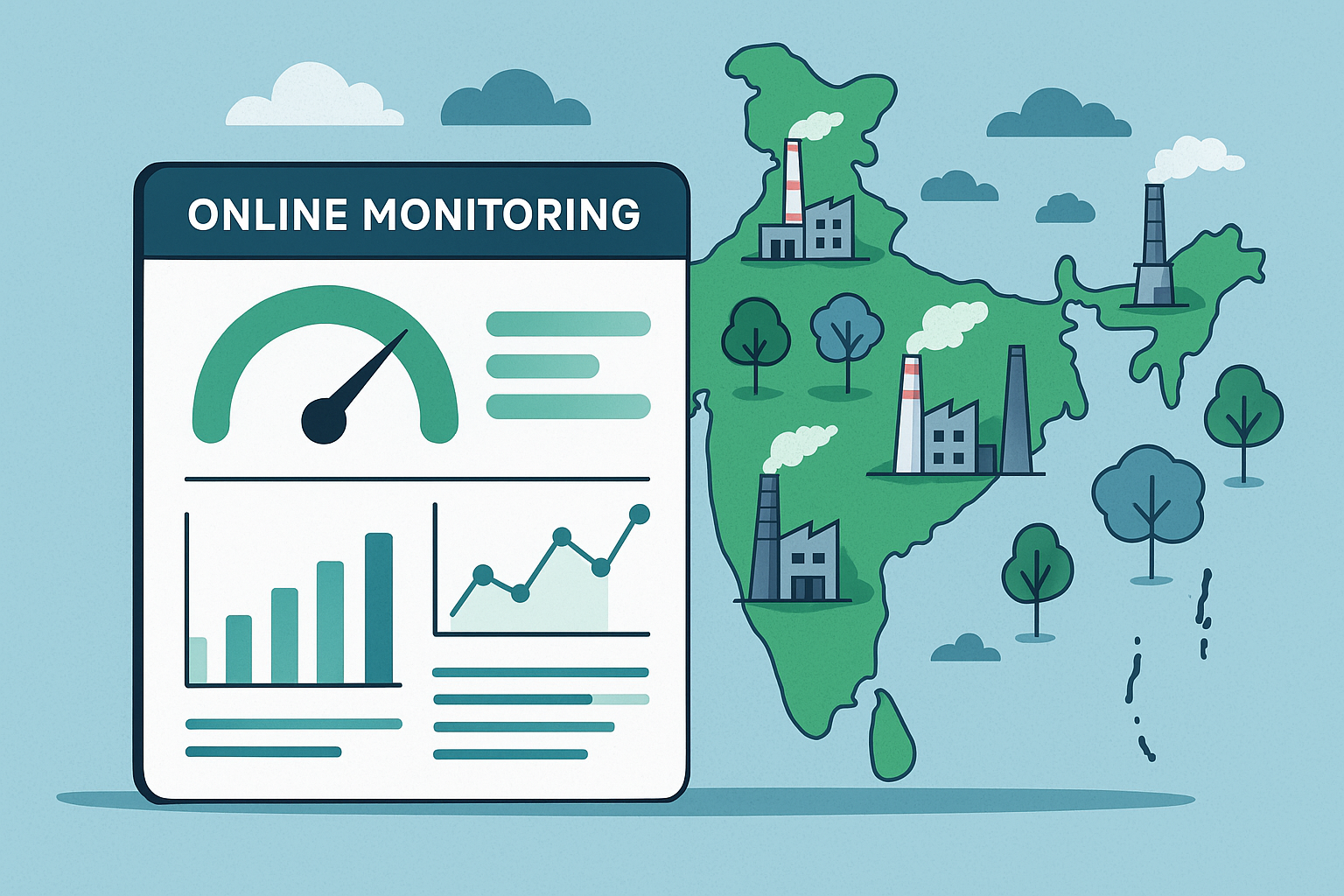
In today’s era of heightened environmental awareness and stringent regulations, the role of technology in ensuring compliance has become increasingly crucial. One such technology that has gained significant traction in India is the Online Continuous Emission Monitoring System (OCEMS). As a leading provider of advanced water and wastewater treatment solutions, we at Hitesh Enviro Engineers Pvt Ltd (HEEPL) understand the importance of OCEMS and how it can help our industrial and commercial clients maintain regulatory compliance and improve their environmental performance.
Understanding OCEMS: Real-Time Monitoring and Reporting
OCEMS is a sophisticated system that enables the continuous, real-time monitoring and reporting of air emissions and effluent discharge from industrial facilities. This technology employs a network of specialized analyzers and sensors to collect data on various parameters, such as particulate matter, sulfur dioxide, nitrogen oxides, pH, and chemical oxygen demand, among others. The data is then transmitted to a central data acquisition system, which in turn relays the information to the respective pollution control authorities.
The primary purpose of OCEMS is to provide regulatory bodies with immediate and accurate insights into a facility’s environmental impact, allowing for more effective monitoring and enforcement of environmental regulations. This proactive approach helps industries identify and address issues before they escalate, ultimately contributing to improved environmental performance and compliance.
The Regulatory Landscape in India
In India, the implementation of OCEMS is mandated by the Central Pollution Control Board (CPCB) and state-level pollution control boards (PCBs) for industries with significant environmental impact. According to the CPCB guidelines, 17 categories of highly polluting industries, including thermal power plants, cement, steel, paper and pulp, and pharmaceutical facilities, are required to install OCEMS.
The regulatory authorities have set strict timelines for OCEMS implementation, with non-compliance leading to hefty penalties. Recent amendments to environmental regulations have further strengthened the OCEMS requirements, with penalties for non-compliance reaching up to ₹1 crore and the potential for facility closure. This heightened enforcement has created a sense of urgency among industrial players to ensure their OCEMS is properly implemented and integrated with their existing treatment systems.
Integrating OCEMS with Wastewater Treatment Systems
One of the key benefits of OCEMS is its ability to integrate seamlessly with a facility’s wastewater treatment systems, such as Effluent Treatment Plants (ETPs) and Sewage Treatment Plants (STPs). By monitoring the performance of these treatment systems in real-time, OCEMS can provide early warning signals of potential malfunctions or process deviations, allowing for prompt corrective action.
Moreover, the data generated by OCEMS can be leveraged to optimize the performance of treatment systems, leading to improved effluent quality, reduced operating costs, and enhanced environmental compliance. This integration is particularly valuable for HEEPL’s clients, as we can provide comprehensive solutions that address both the treatment and monitoring aspects of their water management needs.
Overcoming OCEMS Implementation Challenges
While the benefits of OCEMS are well-established, its implementation is not without its challenges. One of the primary concerns is the initial investment cost, which can range from ₹10 to ₹50 lakhs, depending on the industry type and monitoring requirements. This can be a significant barrier, especially for small and medium-sized enterprises.
Another challenge is the technical expertise required to properly operate and maintain the OCEMS. Many facilities lack the in-house capabilities to calibrate the analyzers, interpret the data, and ensure the system’s continuous and reliable performance. This is where HEEPL’s team of experts, including microbiologists and environmental consultants, can provide valuable support to our clients.
Best Practices for OCEMS Management
To ensure the long-term success of an OCEMS implementation, it is essential to follow best practices for its management. This includes:
– Establishing regular calibration and maintenance schedules to maintain data accuracy and reliability
– Providing comprehensive training to the facility’s staff on OCEMS operation and data interpretation
– Integrating the OCEMS data with existing treatment systems and processes to optimize environmental performance
– Developing robust data management protocols to ensure compliance with reporting requirements
By adhering to these best practices, our clients can unlock the full potential of OCEMS and leverage it as a powerful tool for environmental compliance and process optimization.
Conclusion: OCEMS as a Cornerstone of Sustainable Environmental Management
As the regulatory landscape in India continues to evolve, the importance of OCEMS will only continue to grow. For industrial and commercial facilities, the implementation of this technology has become a critical component of their environmental management strategy.
At HEEPL, we are committed to supporting our clients in navigating the complexities of OCEMS and integrating it seamlessly with their water and wastewater treatment systems. By combining our technical expertise, innovative solutions, and comprehensive support, we empower our customers to achieve regulatory compliance, optimize their environmental performance, and contribute to a more sustainable future.
If you’re an industrial or commercial facility looking to implement OCEMS or enhance your existing environmental management systems, we invite you to reach out to our team of experts. Together, we can explore customized solutions that address your unique challenges and help you stay ahead of the curve in India’s evolving environmental landscape.
 HITESH ENVIRO ENGINEERS PVT LTD