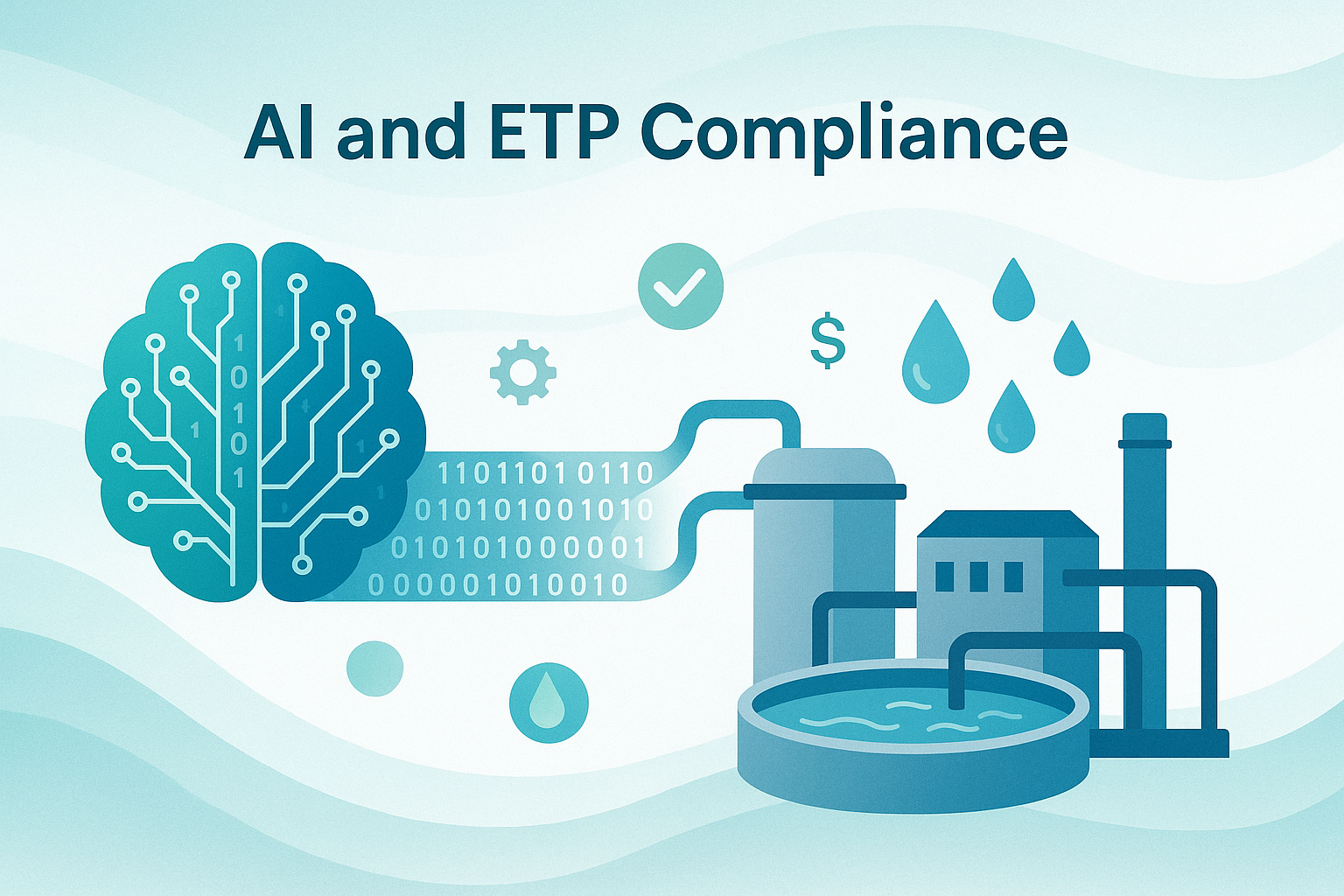
In the rapidly evolving landscape of water and wastewater management, the integration of artificial intelligence (AI) into Effluent Treatment Plants (ETPs) stands out as a transformative development. This innovation offers a promising solution to longstanding challenges faced by industries, especially in maintaining regulatory compliance and optimizing operational costs. As we delve into how AI is reshaping ETPs, we also highlight how companies like Hitesh Enviro Engineers Pvt Ltd (HEEPL) are leading the charge with cutting-edge solutions.
Navigating Compliance Challenges
Industries across the globe grapple with the complex task of ensuring that their wastewater discharge meets stringent environmental regulations. Traditional methods, often manual and labor-intensive, are prone to human error and inconsistencies. In fact, over 40% of industrial facilities report facing compliance challenges with these outdated monitoring methods.
Enter AI-powered automation. By leveraging technologies such as machine learning and IoT sensors, ETPs can now achieve real-time monitoring and automated compliance reporting. These systems not only enhance accuracy but also reduce compliance violations by up to 60%. This shift from manual to automated processes represents a significant leap forward in achieving regulatory compliance while minimizing operational burdens.
Core Technologies Transforming ETPs
AI’s impact on ETPs is largely driven by three core technologies:
– Machine Learning: This enables predictive analytics, allowing systems to anticipate potential compliance breaches and address them proactively.
– IoT Sensors: The adoption of these sensors in water treatment has surged by 35% in recent years, providing continuous data collection for more informed decision-making.
– Predictive Maintenance: By analyzing data trends, AI can predict equipment failures before they occur, reducing unplanned downtime by up to 50% and ensuring smooth operation.
These technologies collectively contribute to a more efficient, reliable, and sustainable wastewater treatment process.
Real-World Applications and Benefits
Consider the case of a textile manufacturer that implemented AI-driven process optimization. The result? A remarkable 22% reduction in effluent treatment costs. This is just one example illustrating how AI can drive tangible benefits for industries looking to streamline operations and cut costs.
From a cost-benefit perspective, the implementation of AI in ETPs shows promising returns. Studies indicate that AI systems can reduce operational costs by 15-30%, with a favorable ROI and quick payback periods for the initial investment.
Integration with Existing Systems
For businesses considering AI integration, compatibility with existing systems is crucial. At HEEPL, our expertise in designing modular and compact ETP systems ensures seamless integration with AI technologies. This not only maximizes the potential benefits but also future-proofs operations against evolving regulatory landscapes. As regulations become stricter over time, AI systems’ ability to adapt swiftly offers a strategic advantage over traditional approaches.
Case Study: Successful AI Implementation
A notable case study involves an industrial facility that faced recurring compliance issues due to outdated monitoring practices. By integrating AI-driven solutions, they achieved consistent regulatory compliance and optimized chemical usage, resulting in significant cost savings and enhanced environmental performance.
Addressing Concerns and Embracing Change
While the benefits of AI are clear, it’s essential to acknowledge concerns regarding job displacement and ethical implications. Reddit discussions reveal mixed sentiments—some users express anxiety over AI replacing jobs, while others embrace it as a tool for efficiency.
To navigate these challenges, it’s crucial for industries to view AI as a complement rather than a replacement for human skills. Practical advice from community discussions suggests using AI as an initial tool for task completion followed by human refinement to ensure quality and relevance.
Steps Forward: Implementing AI in ETPs
For industries ready to explore AI integration into their ETPs, an implementation roadmap is essential. Here are actionable steps:
1. Evaluate Current Systems: Assess existing infrastructure and identify areas where AI can add value.
2. Define Clear Objectives: Set specific goals for what you aim to achieve with AI integration—be it cost reduction, improved compliance, or enhanced monitoring capabilities.
3. Pilot Program: Start with a pilot project to test feasibility and make necessary adjustments before full-scale implementation.
4. Training and Support: Ensure staff are adequately trained on new systems and provide ongoing support for smooth transition.
5. Monitor and Optimize: Continuously monitor system performance and leverage data insights for ongoing optimization.
Conclusion: A New Era in Wastewater Management
As we stand at the cusp of this new era in wastewater management, the role of AI cannot be understated. It’s not just about compliance or cost savings—it’s about embracing innovation for sustainable growth. Companies like HEEPL are at the forefront, providing comprehensive solutions that combine technical expertise with cutting-edge technology.
Incorporating AI into ETPs represents more than just an upgrade; it’s an evolution towards smarter, more efficient operations that benefit both businesses and the environment alike.
 HITESH ENVIRO ENGINEERS PVT LTD